On this page
Direct answer
Sarcopenia is an age-related disorder involving low muscle strength and, depending on the consensus definition, low muscle quantity or quality and impaired physical performance.12 Prevention is not a guarantee, but progressive resistance training, sufficient nutrition and protein, regular activity, and attention to illness, medications, and unintentional weight loss can support muscle and function across adulthood.12
Menopause age is a useful time to build reserve, not a diagnosis of sarcopenia. A smart scale or appearance cannot diagnose the condition.3 New weakness, repeated falls, slow walking, difficulty rising, or unintentional weight loss deserves clinical assessment because neurologic, endocrine, inflammatory, nutritional, medication, and other causes may be involved.3
Key takeaways
- Strength and function are central—not appearance.3
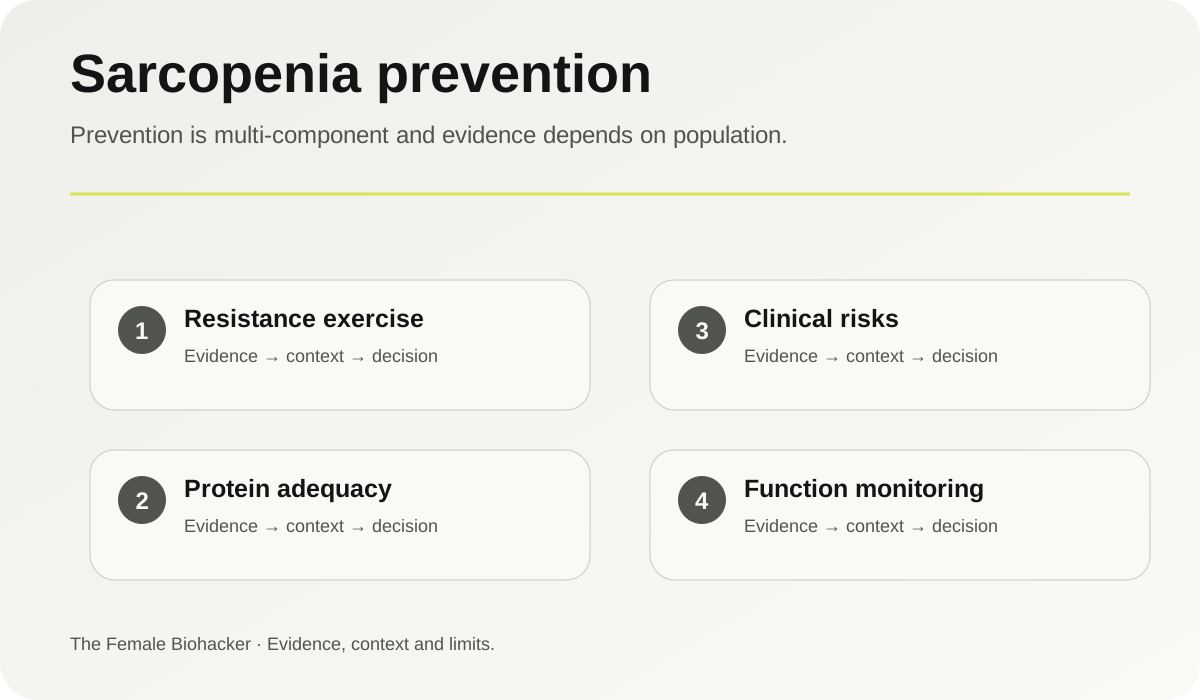
- Resistance training and adequate nutrition are the main modifiable foundations.
- Prevention is different from treatment of established sarcopenia.2
- Weakness or decline needs assessment rather than a supplement stack.3
How strong is the evidence?
Evidence supports resistance training as a primary intervention for strength and function.32 Protein adequacy is important, while incremental benefits from supplementation depend on baseline intake and context.1 Definitions and diagnostic thresholds evolve, so clinical claims must follow current consensus.3
Strong Human Evidence
Why women-specific context matters
Women may enter later life with lower absolute muscle mass, but capacity varies widely.1 Menopause, pregnancy history, caregiving, dieting, osteoporosis, arthritis, chronic disease, and access to training or food can affect risk.3 Prevention messaging should empower rather than frame aging as inevitable decline.
What we know
- Muscle strength predicts function and is a key sarcopenia component.24
- Progressive resistance training improves strength in older adults.1
- Illness, inactivity, and inadequate intake can accelerate loss.3
What we do not know yet
- No intervention guarantees prevention for an individual.
- Consumer body-composition devices cannot establish diagnostic criteria.1
- Supplement benefits are not uniform when diet and training are already adequate.3
Practical, non-prescriptive next steps
- Build a repeatable strength practice before later-life decline is evident.32
- Include protein-rich foods and sufficient total energy across the day.2
- Maintain walking, balance, and task-specific activity alongside strength work.2
- Notice changes in chair-rise ability, carrying, stairs, gait, falls, and unintentional weight.
Risks, limits and important context
- Do not self-diagnose from a scale, mirror, or online grip threshold.
- Rapid weight loss can include lean-tissue loss and needs context.2
- Kidney disease, frailty, swallowing problems, and complex illness require individualized nutrition.4
- Supplements do not replace training, food, or evaluation of weakness.
Common myths
“Sarcopenia starts only in very old age.”
Muscle changes accumulate over time; earlier strength and activity can build reserve.31
“Low body weight always means sarcopenia.”
Diagnosis considers strength, muscle measures, performance, and clinical context.12
“A protein shake prevents it.”
No single product guarantees prevention; training, overall intake, illness, and function matter.
When to seek professional care
- Seek assessment for repeated falls, rapid decline, difficulty rising or walking, swallowing problems, or unintentional weight loss.
- Use qualified support for exercise when frailty, osteoporosis, neurologic disease, or major pain affects safety.
- Urgent evaluation is needed for sudden weakness, facial droop, speech difficulty, or loss of consciousness.
References
- National Institute on Aging. How Can Strength Training Build Healthier Bodies as We Age?. Accessed 2026-08-21.
- Systematic review. Sarcopenia interventions in menopausal women (PMID 37964288). Accessed 2026-08-21.
- Review. Nutrition and female sarcopenia (PMID 38043101). Accessed 2026-08-21.
- Overview of reviews. Protein and resistance-training adaptations (PMID 35689750). Accessed 2026-08-21.
Related reading
Claim-level source ledger
Evidence used on this page
- Effects of Protein Supplementation Associated with Resistance Training on Body Composition and Muscle Strength in Older Adults: A Systematic Review of Systematic Reviews with Meta-analyses – PubMed. PMID 35689750. DOI 10.1007/s40279-022-01704-0. Checked 2026-08-25.
- Effect of non-pharmacological interventions on the prevention of sarcopenia in menopausal women: a systematic review and meta-analysis of randomized controlled trials – PubMed. PMID 37964288. DOI 10.1186/s12905-023-02749-7. Checked 2026-08-25.
- How can strength training build healthier bodies as we age? | National Institute on Aging. Checked 2026-08-25.
- Nutrition Interventions on Muscle-Related Components of Sarcopenia in Females: A Systematic Review of Randomized Controlled Trials – PubMed. PMID 38043101. DOI 10.1007/s00223-023-01157-1. Checked 2026-08-25.
Interpretation boundary: each source is listed for the statement it supports; population and design limits remain visible.