NutritionThe evidence, explained
Protein for
women over 40
A reference range is a starting point for a question—not a prescription.
Explore the source populations, practical food context and limitations behind protein guidance.
Educational guide. Independent medical review has not been completed.

On this page
- Direct answer
- Key takeaways
- How strong is the evidence?
- Why women-specific context matters
- What we know
- What we do not know yet
- Practical, non-prescriptive next steps
- A useful first step: read a serving, not a promise
- Risks, limits and important context
- Common myths
- When to seek professional care
- References
- Related reading
- Evidence used on this page
- Specific source details
Direct answer
Protein needs after 40 are not determined by age or menopause alone.1 The U.S. adult reference intake provides a baseline, while sports and healthy-aging literature often evaluates higher intakes in the context of resistance training, energy restriction, or older age. An appropriate target depends on body size, total energy intake, training, food pattern, kidney and liver health, pregnancy, illness, and whether the goal is adequacy, recovery, or muscle preservation.12
Food quality and distribution across meals can make a plan easier to use, but there is no universal gram target for every woman.1 Protein works within an overall pattern that includes enough energy, carbohydrate, fat, fiber, vitamins, and minerals; powder is optional, not a requirement.1
Key takeaways
- Guideline baselines are not the same as personalized prescriptions.
- Resistance training provides the stimulus that nutrition supports.
- Distributing protein-rich foods across the day can be practical.1
- Kidney disease requires individualized protein advice;K frailty, restrictive eating or complex illness also warrants professional assessment.
How strong is the evidence?
Protein adequacy and resistance training are supported by substantial evidence.1 Reviews suggest added protein may modestly augment training adaptations in some contexts, but results depend on baseline intake, intervention, age, and outcome.12 Female- and menopause-specific data are less complete.
Strong Human Evidence
What the human evidence covers: the older-adult review assesses protein added to resistance training, while the whey review studies postmenopausal women aged 55 and over. Neither establishes a universal requirement for every woman over 40. Muscle-mass and strength outcomes should not be treated as the same result. Older-adult review; postmenopausal whey review.
Why women-specific context matters
Midlife women may be dieting, using GLP-1 medicines, training hard, managing gastrointestinal symptoms, or eating within cultural and budget constraints.1 These contexts affect adequacy. Advice should avoid both fear of protein and one-number prescriptions that ignore health and total diet.1
What we know
- The adult U.S. protein RDA is 0.8 grams per kilogram per day as a population reference.P
- Progressive resistance training is central to improving strength and muscle.1
- Both animal and well-planned plant protein patterns can meet needs.P
What we do not know yet
- One intake or meal threshold is not proven optimal for every midlife woman.
- Protein timing does not override total adequacy and training quality.P
- A consumer calculator cannot account for all kidney, liver, pregnancy, illness, or eating-disorder considerations.3
Practical, non-prescriptive next steps
- Estimate current intake from a typical day before changing it.
- Add a practical protein-rich food to meals that are consistently low in protein.1
- Pair nutrition goals with progressive resistance training and sufficient total energy.
- Use a registered dietitian for individualized targets when health conditions, sports goals, or restricted diets complicate planning.
A useful first step: read a serving, not a promise
Before comparing a target with your day, check how much of a food you actually ate. In this arithmetic example, a label lists 10 grams of protein per serving and you eat 1.5 servings: 10 × 1.5 = 15 grams. This describes the example portion; it is not a suggested meal size or daily requirement. FDA explains serving-based label amounts.
Use the protein evidence-range explainer to see arithmetic alongside its reference population. Bring the selected reference, your usual food pattern and any medical constraints to a registered dietitian rather than treating the result as a prescription.
Risks, limits and important context
- Do not use a general calculator as a medical prescription.
- Kidney disease can change protein needs;K other metabolic or liver conditions require their own clinical advice.
- Large supplement servings can displace fiber-rich foods or worsen gastrointestinal symptoms.3
- Avoid escalating restriction when appetite is already low or eating-disorder risk is present.1
Common myths
“All women over 40 need the same grams.”
Needs vary with body size, activity, diet, health, and goal.
“Protein powder is essential.”
It is a convenience product; many people can meet needs with food.P
“More is always better.”
Beyond adequacy, returns diminish and tradeoffs or medical constraints matter.
When to seek professional care
- Ask a clinician or dietitian for a personalized plan with kidney disease, liver disease, pregnancy, active cancer treatment, frailty, or major appetite loss.2
- Seek care for unexplained weakness, rapid weight loss, swallowing difficulty, or persistent gastrointestinal symptoms.
- Get eating-disorder support if tracking or restriction is becoming compulsive or unsafe.
References
- National Academies. Dietary Reference Intakes: Macronutrients. Accessed 2026-08-21.
- Office of Disease Prevention and Health Promotion. Dietary Reference Intakes. Accessed 2026-08-21.
- Overview of reviews. Protein supplementation and resistance training (PMID 35689750). Accessed 2026-08-21.
- Systematic review. Whey protein in postmenopausal women (PMID 36235862). Accessed 2026-08-21.
Related reading
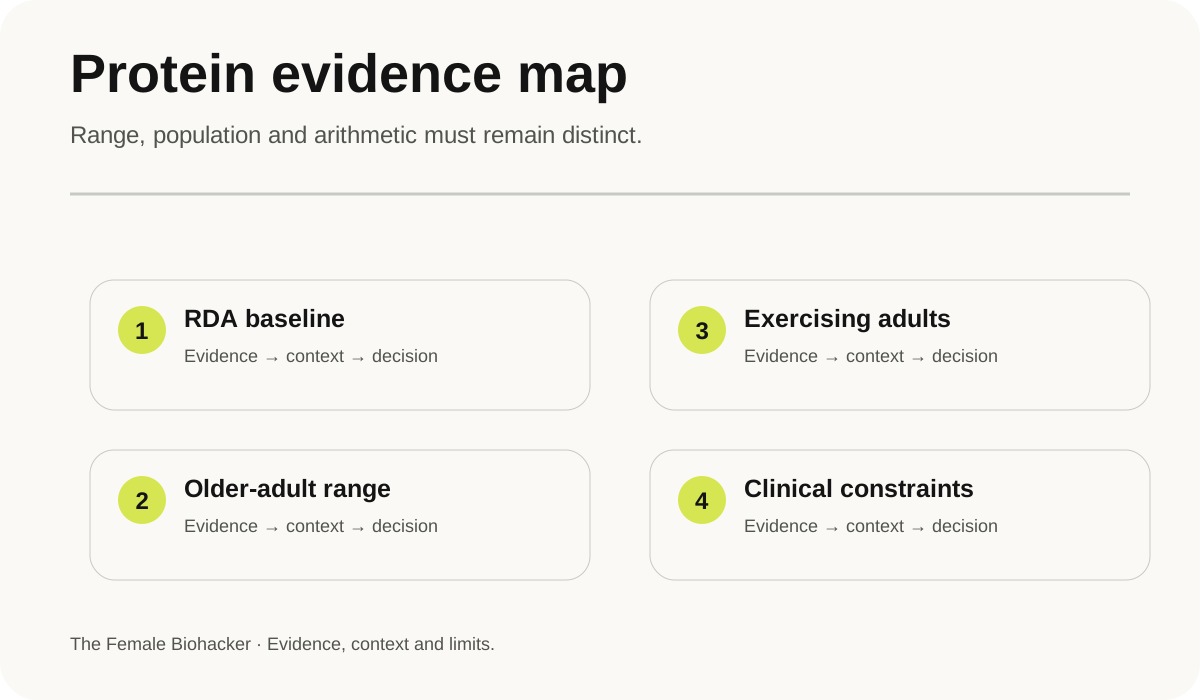
Claim-level source ledger
Evidence used on this page
- Effects of Protein Supplementation Associated with Resistance Training on Body Composition and Muscle Strength in Older Adults: A Systematic Review of Systematic Reviews with Meta-analyses – PubMed. PMID 35689750. DOI 10.1007/s40279-022-01704-0. Checked 2026-08-25.
- Effect of Whey Protein Supplementation in Postmenopausal Women: A Systematic Review and Meta-Analysis – PubMed. PMID 36235862. DOI 10.3390/nu14194210. Checked 2026-08-25.
- Dietary Reference Intakes | odphp.health.gov. Checked 2026-08-25.
Interpretation boundary: each source is listed for the statement it supports; population and design limits remain visible.
Specific source details
- NIH ODS: Dietary Supplements for Exercise and Athletic Performance. Protein section: adequacy, food sources, training and timing evidence. Sports context is not automatically a prescription for every midlife woman. Reopened 2026-09-08.
- NIDDK: Healthy Eating for Adults with Chronic Kidney Disease. Protein and medical nutrition therapy sections. Individual needs vary; dialysis can change requirements. This is not advice to restrict protein independently. Reopened 2026-09-08.