On this page
TFB Product and Provider Review Methodology
Scope of this review
Decision criteria
- Testing status is explicit: not tested, desk research, or documented testing.
- Corrections and update dates are part of the review record.
Who this is for
Women navigating midlife health decisions and the clinicians or reviewers helping them evaluate evidence and uncertainty.
What the evidence can support
What remains uncertain
- Provider outcomes require careful adjustment and consent.
How to use this page
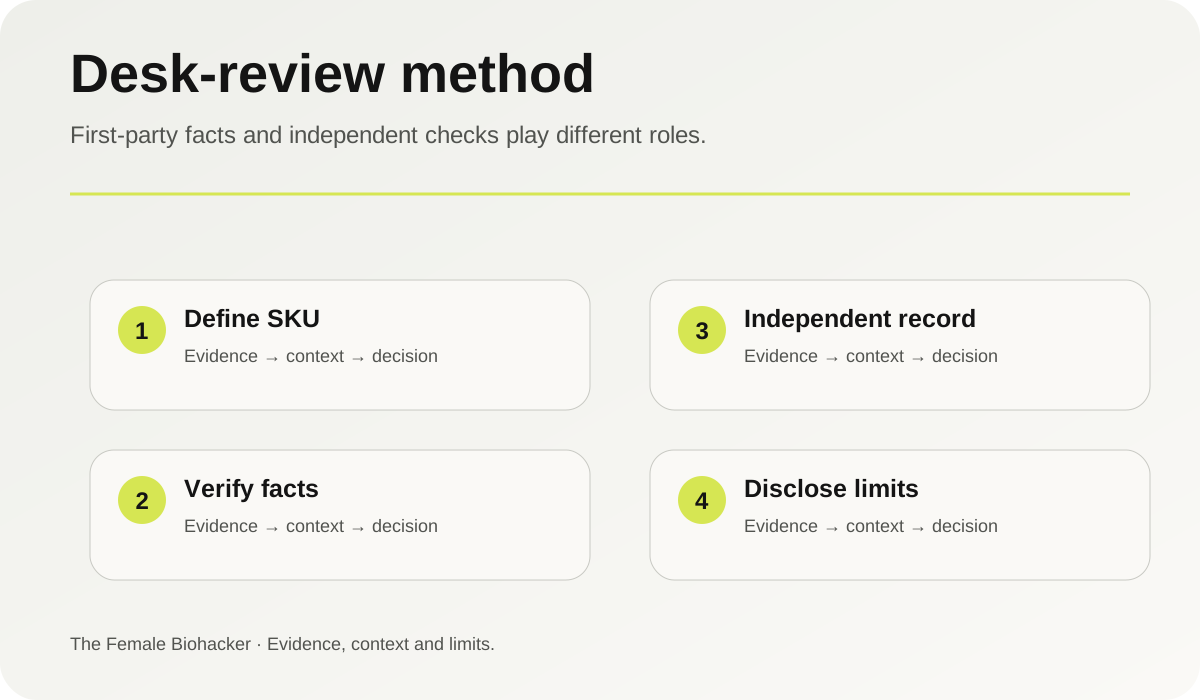
- Define inclusion and exclusion criteria.
- Preserve source copies and product versions.
- Separate score components and disclose conflicts.
Risks, red flags, and limits
- No star ratings, testimonials, or customer claims are fabricated.
- No medical result is guaranteed.
- No score is active until calibrated and legally reviewed.
Sources
Know what kind of evidence you are reading
- Specification research: label, size, price, terms and verifiable public records.
- Independent certification: a named program and matching current product listing within its stated scope.
- Hands-on use: an acquired product, named tester, protocol, dates and limitations.
- Laboratory testing: identified sample/batch, custody, qualified method, laboratory, result and uncertainty.
No higher testing or experience label is implied by a lower one.
Required status labels
- Desk researched: public specifications and policies only.
- Handled: the physical product was obtained and basic attributes documented.
- Used: named testers and protocol are disclosed; no clinical efficacy inference.
- Laboratory tested: batch, custody, method, laboratory and results are documented.