On this page
Metabolic Flexibility: What the Research Concept Can—and Cannot—Tell You
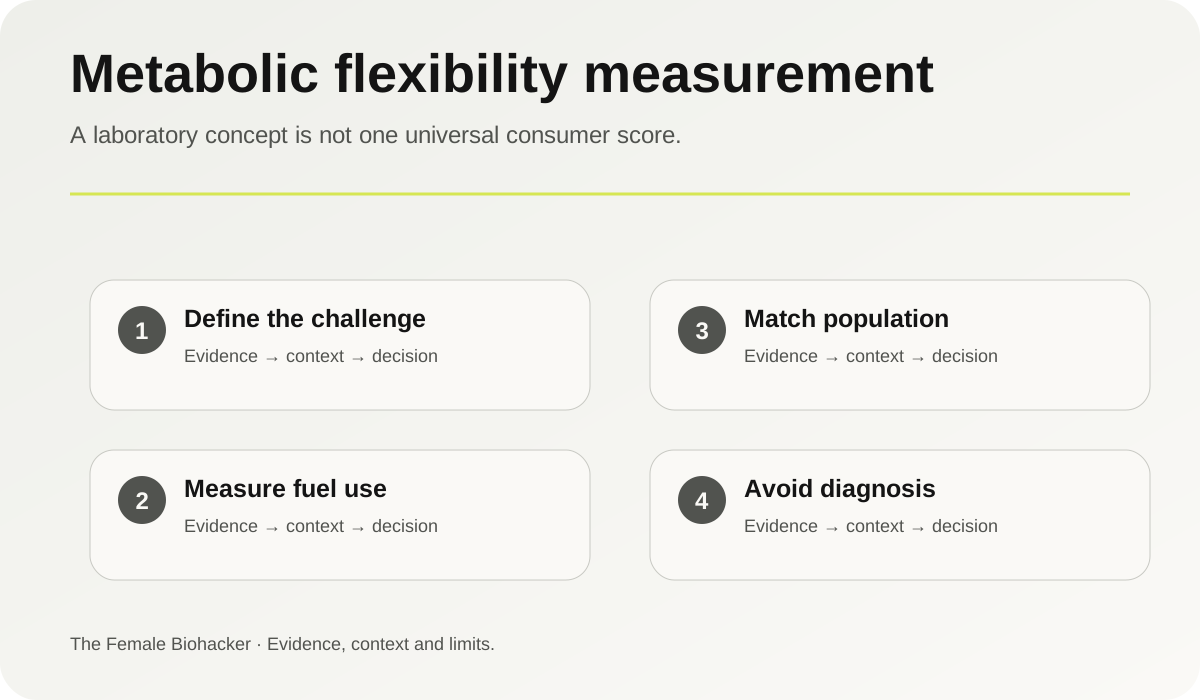
Metabolic flexibility describes context-dependent changes in fuel use. It is not a diagnosis, a single “optimal” number, or proof that a device, fast, food or supplement improves health.
The metabolic question
Researchers use “metabolic flexibility” for the capacity to adapt metabolism to changes in fuel availability and energy demand. The definition is broad; the measured result depends on the challenge and protocol. A 2026 whole-room calorimetry study, for example, found that the measured response differed across diet and exercise conditions.
Outcomes to keep separate
- A respiratory quotient or respiratory exchange ratio describes fuel oxidation in a defined setting; it is not a universal home diagnosis.
- Different challenges—fasting to feeding, insulin stimulation, exercise or controlled diet—answer different questions.
- Associations with obesity, diabetes or activity do not prove that changing a proprietary score changes clinical outcomes.
- Women-specific and menopause-stage evidence remains too limited for a universal midlife target.
How metabolic flexibility is measured
Indirect calorimetry estimates oxygen consumption and carbon-dioxide production. Researchers can use those gases to estimate the balance of carbohydrate and fat oxidation during a controlled challenge. The interpretation depends on energy balance, recent diet, exercise, fasting duration, equipment and protocol.
| Research challenge | What may be observed | What it cannot establish alone |
|---|---|---|
| Fasted to fed | Change in substrate oxidation after a meal | Long-term health outcome or an ideal personal diet |
| Insulin-stimulated clamp | Fuel response under a controlled laboratory stimulus | A consumer diagnosis or treatment choice |
| Exercise challenge | Fuel-use response as demand changes | That more fat oxidation is always better |
| Whole-room calorimetry | Longer, controlled patterns across diet, sleep and activity | A universal score transferable to every device |
What research says about health
Reviews link impaired flexibility with obesity, insulin resistance and type 2 diabetes, but those literatures include different tissues, tests and populations. The association is not a license to call an individual “metabolically inflexible” from one glucose trace, fasting response or wearable estimate.
Women and menopause-specific limits
A small 2024 study compared 22 postmenopausal women divided between hormone-therapy and untreated groups. It reported differences in mitochondrial and whole-body measures, but its size and observational treatment grouping do not establish that hormone therapy improves a universal metabolic-flexibility outcome. Evidence from a small postmenopausal sample should not be generalized to perimenopause, all hormone products, or personal treatment decisions.
How to evaluate a consumer claim
- Ask what exact signal is measured and whether the method is published.
- Ask what challenge was used and whether conditions were standardized.
- Check whether the comparison population matches sex, age, life stage, health and training context.
- Look for a validated link to an outcome that matters—not just movement in the proprietary score.
- Prefer established clinical and functional measures when they answer the real decision.
Safety and practical limits
Do not use this concept to justify extreme fasting, restrictive eating or delaying evaluation of persistent symptoms or abnormal clinical results. A consumer score cannot diagnose diabetes, endocrine disease or nutritional adequacy.
References
- Metabolic Flexibility as an Adaptation to Energy Resources and Requirements in Health and Disease. Cell Metabolism. 2018. PMID 29697773.
- Assessing metabolic flexibility in adults under physiological conditions. Physiological Reports. 2026. PMID 42322001.
- Sedentary behaviour is a key determinant of metabolic inflexibility. Journal of Physiology. 2017. PMID 28543022.
- Metabolic Flexibility in Health and Disease. Cell Metabolism. 2017. PMID 28467922.
- Metabolic flexibility in postmenopausal women. Acta Physiologica. 2024. PMID 38404156.
Sources checked 25 August 2026. No retraction or correction notice was visible in the reopened PubMed records at check time.