On this page
- Direct answer
- Key takeaways
- How strong is the evidence?
- Why women-specific context matters
- What we know
- What we do not know yet
- Practical, non-prescriptive next steps
- Risks, limits and important context
- Common myths
- When to seek professional care
- References
- Related reading
- Evidence used on this page
- Specific source details
Direct answer
Weight and body composition can change in midlife because of interacting factors: age-related shifts in energy needs and muscle, sleep, activity, medications, stress, food environment, and menopause-related changes in fat distribution. A sustainable plan focuses on dietary quality, an achievable energy deficit when weight loss is appropriate, resistance training, aerobic activity, sleep, and enough protein and micronutrients to protect health.2
Look for a sustainable program with an eating plan, activity appropriate to your health and ongoing support—not just a “hormone reset” label.W The safest goal and pace vary with medical history, eating-disorder risk, current body size, medications, and whether the priority is weight, waist, strength, metabolic markers, symptoms, or quality of life.W
Key takeaways
- Midlife weight change is not a character flaw.
- Protecting muscle and function matters alongside scale weight.2
- Small sustainable changes usually outperform rigid short-term rules.
- Medication, thyroid, sleep, mood, and eating-disorder context may require clinical support.F
How strong is the evidence?
Evidence supports comprehensive lifestyle programs for weight management and health, but menopause-specific trials vary in size, duration, and intervention.2 Exercise can improve fitness, strength, and body composition even when scale weight changes modestly.1
Strong Human Evidence
Population limit: the Khalafi exercise review concerns postmenopausal women and body-composition outcomes. It does not establish a best workout for perimenopause, a personal weight-loss result or safety clearance.
Why women-specific context matters
Menopause can change fat distribution, while age, income, culture, disability, caregiving, medication use, and prior dieting shape what is feasible. Weight-neutral health goals may be more appropriate for some people, particularly where restriction would worsen an eating disorder or frailty risk.2
What we know
- Energy balance influences body weight, but biology and environment influence both sides of that balance.F
- Resistance training helps preserve or build strength and lean tissue.1
- Diet quality, sleep, and physical activity support health even without large weight loss.23
What we do not know yet
- No formula precisely predicts an individual’s response.
- A menopause-branded diet has not been shown to be uniquely necessary.
- Short studies do not establish long-term adherence, safety, or weight maintenance.
Practical, non-prescriptive next steps
- Choose one or two measurable behaviors, such as regular meals, more minimally processed foods, or planned walking.
- Include progressive resistance training that fits current ability and medical context.
- Track outcomes beyond weight: strength, energy, sleep, waist, blood pressure, or laboratory markers when clinically appropriate.
- Reassess after a defined period and adjust without punishment or extreme restriction.
Risks, limits and important context
- Rapid or unexplained weight change needs medical assessment.
- Aggressive restriction can worsen fatigue, bone health, mood, training recovery, and lean-mass loss.
- Weight-loss medicines require qualified prescribing and follow-up.
- A general article cannot set a safe calorie target for an individual.3
Common myths
“Menopause makes weight loss impossible.”
Responses vary; sustainable changes can improve health and may change weight, but results are not uniform.3
“Carbohydrates must be eliminated.”
Overall pattern, adequacy, energy intake, and personal context matter more than a universal ban.
“Sweating more means more fat loss.”
Sweat primarily reflects temperature regulation and fluid loss, not a direct measure of fat loss.
When to seek professional care
- Seek professional support for rapid change, loss of control around eating, purging, fainting, severe restriction, or distress about food or body image.
- Discuss weight-affecting medications, possible thyroid symptoms, sleep apnea, diabetes risk, or new cardiometabolic findings with a clinician.W
- Urgent symptoms such as chest pain, severe breathlessness, or fainting require prompt care.E
References
- NIDDK. Eating & Physical Activity to Lose or Maintain Weight. Accessed 2026-08-21.
- NIDDK. Choosing a Safe and Successful Weight-loss Program. Accessed 2026-08-21.
- U.S. Department of Health and Human Services. Physical Activity Guidelines for Americans, 2nd edition. Accessed 2026-08-21.
- Khalafi et al. Exercise training and body composition in postmenopausal women. Frontiers in Endocrinology (PMID 37388207). Accessed 2026-08-21.
Related reading
- Perimenopause diet principles
- Training during perimenopause
- Understanding muscle mass
- Medical disclaimer
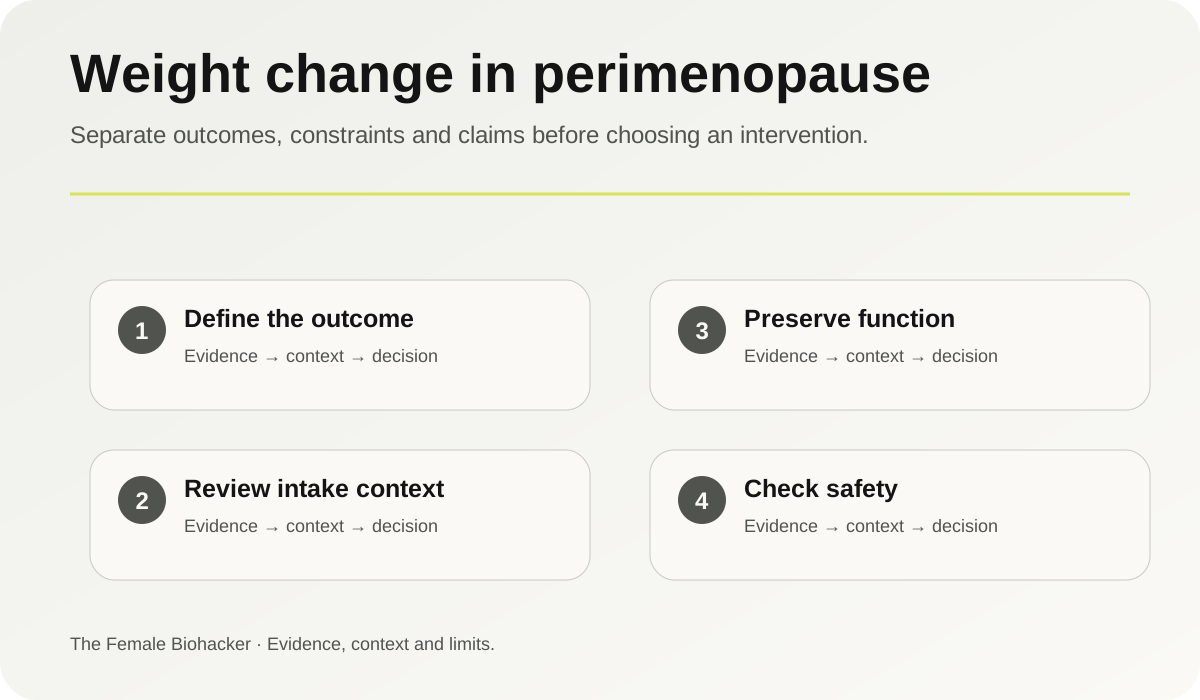
Claim-level source ledger
Evidence used on this page
- The effects of exercise training on body composition in postmenopausal women: a systematic review and meta-analysis – PubMed. Khalafi et al. Frontiers in Endocrinology. 2023;14:1183765. PMID 37388207. DOI 10.3389/fendo.2023.1183765. Identity checked 2026-09-08. Postmenopausal exercise/body-composition evidence; not a perimenopause-specific prescription.
- Eating & Physical Activity to Lose or Maintain Weight – NIDDK. Checked 2026-08-25.
- Choosing a Safe & Successful Weight-loss Program – NIDDK. Checked 2026-08-25.
Interpretation boundary: each source is listed for the statement it supports; population and design limits remain visible.
Specific source details
- NIDDK: Choosing a Safe and Successful Weight-loss Program. Professional assessment, tailored plans, activity and monitoring sections. A general program guide does not supply an individual calorie target. Reopened 2026-09-08.
- NIDDK: Factors Affecting Weight and Health. Lifestyle, environment, sleep, medicine and health-condition sections. Broad weight context, not proof of a particular hormonal cause. Reopened 2026-09-08.
- MedlinePlus: Recognizing Medical Emergencies. Adult warning signs and obtaining emergency help. General safety guidance; not an exercise study or individualized triage. Reopened 2026-09-08.