How We Evaluate Evidence
Evidence states
Consistent clinical or authoritative support for a specific question and context.
Human findings are developing or inconsistent; the question, outcome and remaining uncertainty matter.
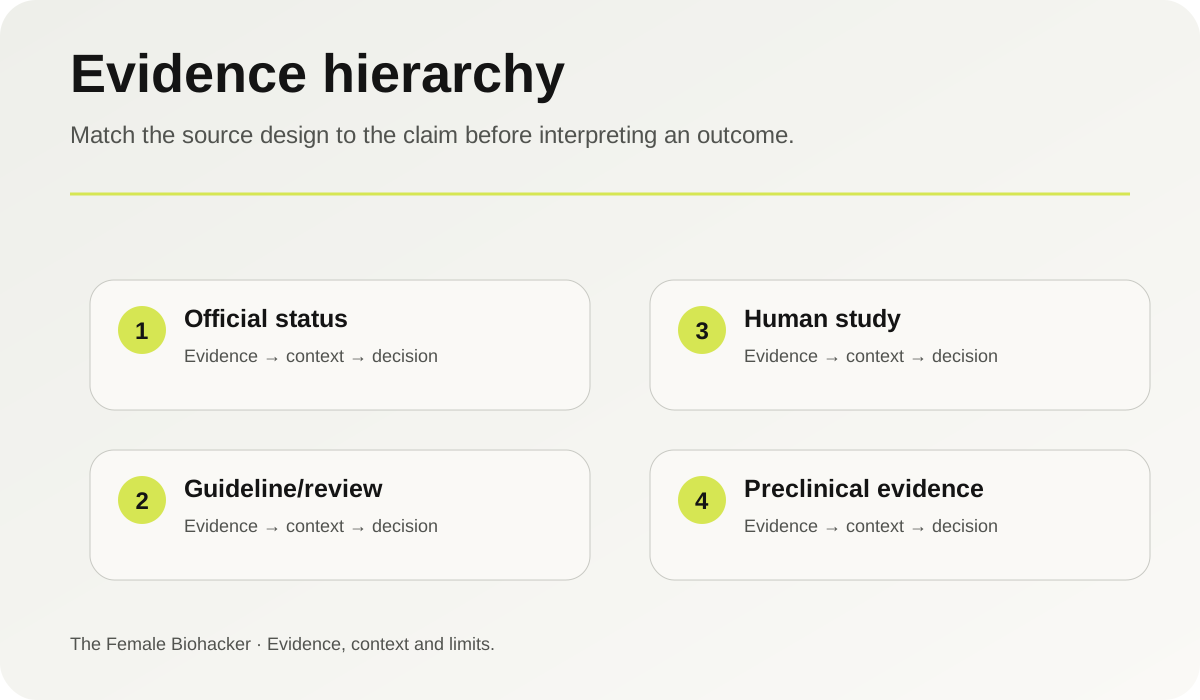
Direct, applicable human evidence is sparse or missing. Mechanisms and animal findings cannot establish a personal benefit or safety.
The six-part check
- Question: define the decision, not just the molecule or symptom.
- Population: record sex, age, life stage, health and training context.
- Intervention or exposure: preserve exact product, dose, route and duration where reported.
- Comparator and outcome: distinguish surrogate measures from outcomes readers care about.
- Design and certainty: separate mechanisms, animal work, observational associations and controlled trials.
- Applicability and harm: state what transfers, what does not and which alternatives or risks matter.
Women-specific applicability
A study that includes women is not automatically a women-specific answer. Menopause status, subgroup reporting and statistical power are recorded when available; missing details remain missing.
Labels do not replace reading
An overall label is an orientation tool, not a score for every sentence or a substitute for a clinician’s assessment. Read the specific source and its limits beside the claim. An editorial checklist describes our method; it is not a study result or an outside organization’s endorsement.